
Restoring Illumination When Fixtures Go Dark
Outdoor Landscape Lighting Repair & Maintenance in Ringgold for systems showing dark zones, flickering output, or misaligned beams
Landscape lighting stops working correctly when connections corrode, fixtures shift out of position, lamps burn out unevenly, or voltage fluctuates across zones. River City Irrigation, LLC troubleshoots and repairs outdoor lighting systems experiencing dark fixtures, inconsistent brightness, flickering, poor aim, or irregular operation in the Tri-State Area. The work addresses failed components, damaged wiring, and alignment problems that reduce visibility and diminish nighttime appearance.
Diagnostics begin with checking transformer output, testing voltage at each fixture, inspecting wire connections for moisture intrusion or corrosion, and verifying lamp function and fixture condition. Repairs involve replacing failed lamps, resealing corroded connections, re-aiming shifted fixtures, and addressing voltage imbalances caused by overloaded circuits or undersized wire runs that weren't apparent until the system aged.
Schedule a lighting diagnostic to identify why specific fixtures or zones no longer operate as intended.
What Changes After Lighting Problems Are Resolved
Lighting failures rarely affect all fixtures simultaneously—problems show up as isolated dark spots, zones with reduced brightness, or fixtures that flicker intermittently. These issues trace to specific causes: corroded wire splices interrupt power to downstream fixtures, misaligned fixtures illuminate ground instead of intended features, and failing transformers deliver inconsistent voltage that causes lamps to dim or strobe. Repairs require isolating the fault, testing components individually, and replacing or adjusting what's no longer functioning correctly.
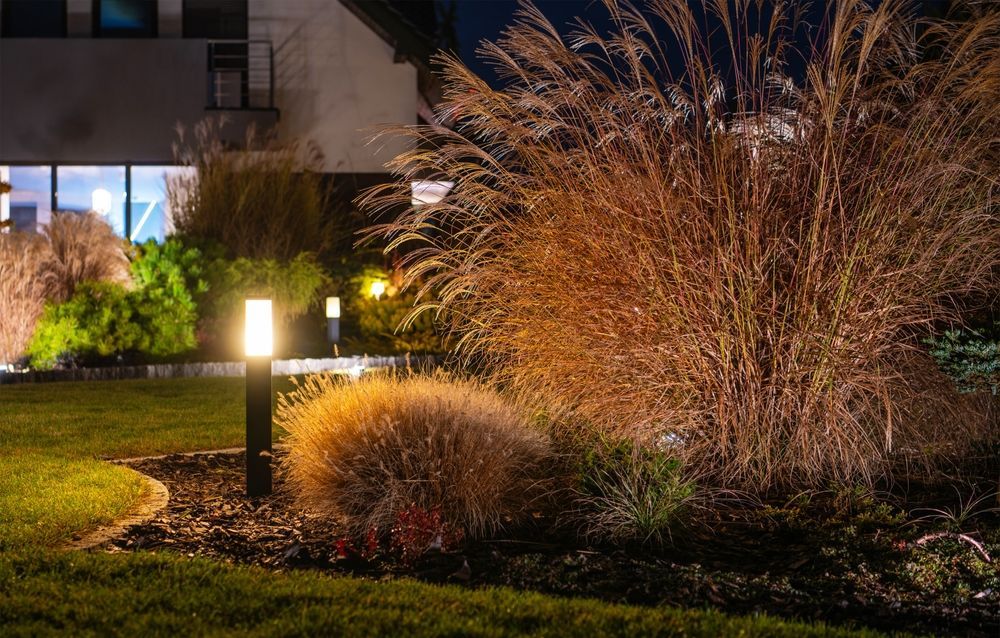
Once repairs are complete, you'll see all fixtures illuminated evenly, pathways and architectural features consistently lit, and no flickering or intermittent operation during evening hours. Zones that previously went dark mid-cycle stay on through programmed shutdown, and fixtures aimed at trees or building details no longer point toward the ground or sky due to shifted mounting hardware.
Maintenance includes seasonal inspection of wire burial depth after landscape work, cleaning of fixture lenses that accumulate dirt or oxidation, tightening of connections loosened by temperature cycling, and lamp replacement before widespread failures occur. Properties in areas with heavy clay or frequent rain benefit from checking that fixture bases haven't settled or tilted, which changes beam direction and creates unintended shadows or glare.
Answers to Frequent Service Questions
Lighting repairs depend on identifying where and why failures occur, and property owners often ask about troubleshooting methods and how long repairs take.
What causes multiple fixtures to go dark at once?
A single corroded wire splice or failed connection upstream affects all fixtures on that circuit, so diagnostics trace the circuit from the transformer to the last functioning fixture, then test connections and wire continuity until the break is found and repaired.
How does fixture misalignment happen after installation?
Ground settling, mulch displacement, lawn equipment impacts, and freeze-thaw cycles in North Georgia clay soils shift fixture positions over time, changing where light falls and requiring periodic re-aiming to restore the original lighting pattern.
When should lamps be replaced across a lighting system?
Replacing all lamps on a schedule before individual failures create dark zones ensures consistent color temperature and brightness, prevents the nuisance of random outages, and reduces service calls compared to replacing lamps one at a time as they burn out.
Why do some fixtures flicker while others stay steady?
Flickering usually indicates a loose lamp, corroded socket, or marginal connection that makes intermittent contact, and the problem is isolated by testing voltage at the fixture, inspecting the lamp seat, and checking wire terminations for oxidation or moisture intrusion.
What does a lighting diagnostic involve?
The diagnostic measures transformer output, checks voltage at each fixture to detect drops, inspects all visible connections and wire runs, tests lamp function, evaluates fixture alignment and condition, and provides a written summary of failed components and recommended repairs.
River City Irrigation, LLC restores reliable illumination to outdoor lighting systems through systematic troubleshooting and component-level repair. Contact River City Irrigation, LLC to arrange a diagnostic evaluation for fixtures that no longer operate correctly or zones showing inconsistent brightness.