
Lighting That Makes Outdoor Spaces Functional After Dark
Outdoor Landscape Lighting Design & Installation in Ringgold for properties requiring nighttime visibility and architectural emphasis
Pathways that disappear after sunset, entryways that lack definition, and landscape features invisible at night limit how properties function once daylight fades. River City Irrigation, LLC designs and installs custom outdoor lighting for landscaping, pathways, architectural details, entrances, trees, and outdoor living areas throughout the Greater Chattanooga Area. The lighting addresses poor visibility, lack of depth in nighttime appearance, and underused outdoor spaces that could serve property owners year-round.
The design process begins with evaluating sight lines, existing electrical access, and which features—whether a stone facade, specimen tree, or patio seating area—should receive emphasis. Fixtures are positioned to avoid glare while directing light where it's needed, using uplighting for vertical elements, path lights for walkways, and downlighting for steps or seating areas. Transformer capacity, wire gauge, and fixture spacing are calculated to ensure consistent brightness across all zones without voltage drop at distant fixtures.
Schedule a lighting consultation to review property layout and discuss which areas would benefit from intentional illumination.
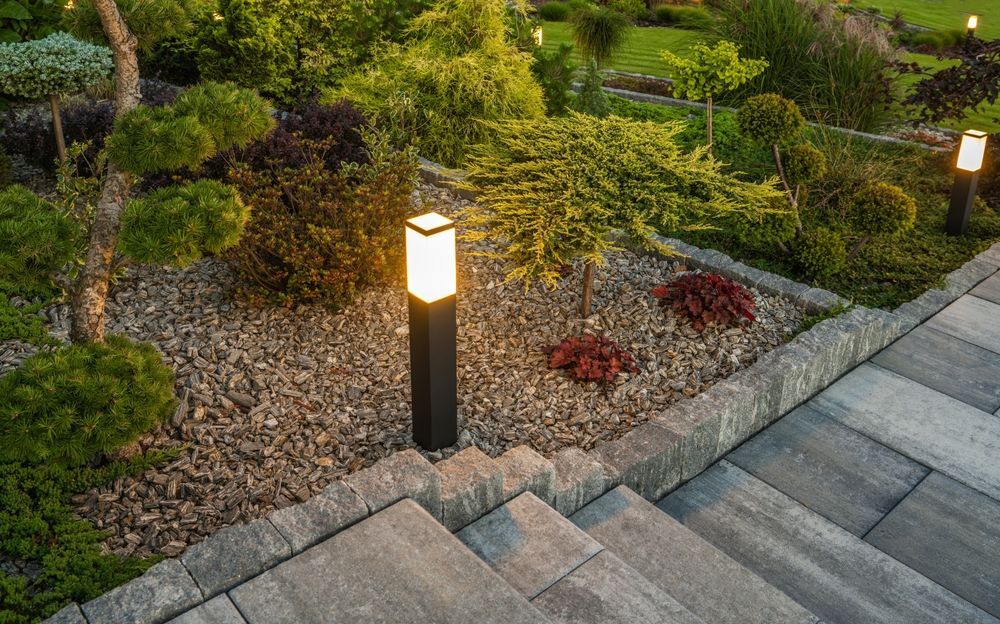
How Lighting Placement Addresses Functionality and Appearance
Outdoor lighting fails when fixtures are placed without considering how light spreads, where shadows fall, or how people move through a space after dark. Randomly positioned lights create bright spots surrounded by deep shadows, illuminate ground instead of intended features, or produce glare that makes navigation harder rather than easier. Effective lighting requires understanding beam angles, fixture heights, and how different surfaces—stone, brick, foliage, water—reflect or absorb light.
After installation, you'll notice defined edges along pathways and steps, architectural features that stand out against the night sky, and trees or plant groupings that gain dimension through carefully angled uplighting. Outdoor living areas become usable for evening gatherings, and entrances become clearly identifiable from the street. The lighting also provides security benefits by eliminating dark corners near building perimeters and making property boundaries visible.
The installation includes transformer placement in weatherproof, accessible locations, burial of low-voltage cable at depths that protect against lawn equipment damage, and fixture mounting that withstands seasonal weather without shifting. Timers or photocell controls automate operation so lighting activates at dusk and turns off at a set hour, and systems can integrate with smart controls for manual override or schedule adjustments from mobile devices.
Common Questions About This Service
Lighting installations vary based on property size and goals, and most questions focus on design approach, fixture durability, and how systems operate over time.
What determines where fixtures are placed during design?
Placement depends on what you want visible—architectural details, pathways, specific plants—and how people move through the space, so fixtures are positioned to light those features while avoiding glare in sight lines and ensuring even coverage without dark gaps.
How does outdoor lighting hold up in Ringgold's seasonal weather?
Fixtures rated for outdoor use withstand rain, temperature swings, and humidity common to North Georgia, and installation includes sealed connections, corrosion-resistant materials, and proper fixture angles to shed water rather than collect it in lamp housings or junction points.
When should outdoor lighting be adjusted after installation?
Seasonal plant growth, especially from spring through summer, can block intended light paths or create new shadows, so mid-season adjustments reposition or re-aim fixtures to maintain the original design effect as landscapes mature.
Why do some landscape lighting systems have uneven brightness across zones?
Voltage drop occurs when wire runs are too long or too thin for the load, causing distant fixtures to dim while those near the transformer stay bright, which is why proper wire sizing and transformer placement are calculated during design to maintain consistent output across all fixtures.
What's included in a lighting consultation?
The consultation reviews property features you want emphasized, discusses operational preferences like timer settings or brightness levels, evaluates electrical access and transformer locations, and provides a design plan showing fixture types, placement, and expected nighttime appearance.
River City Irrigation, LLC creates lighting systems that improve both nighttime usability and curb appeal, with designs tailored to each property's layout and intended use. Arrange a lighting consultation to determine fixture placement and transformer requirements for your outdoor spaces.